
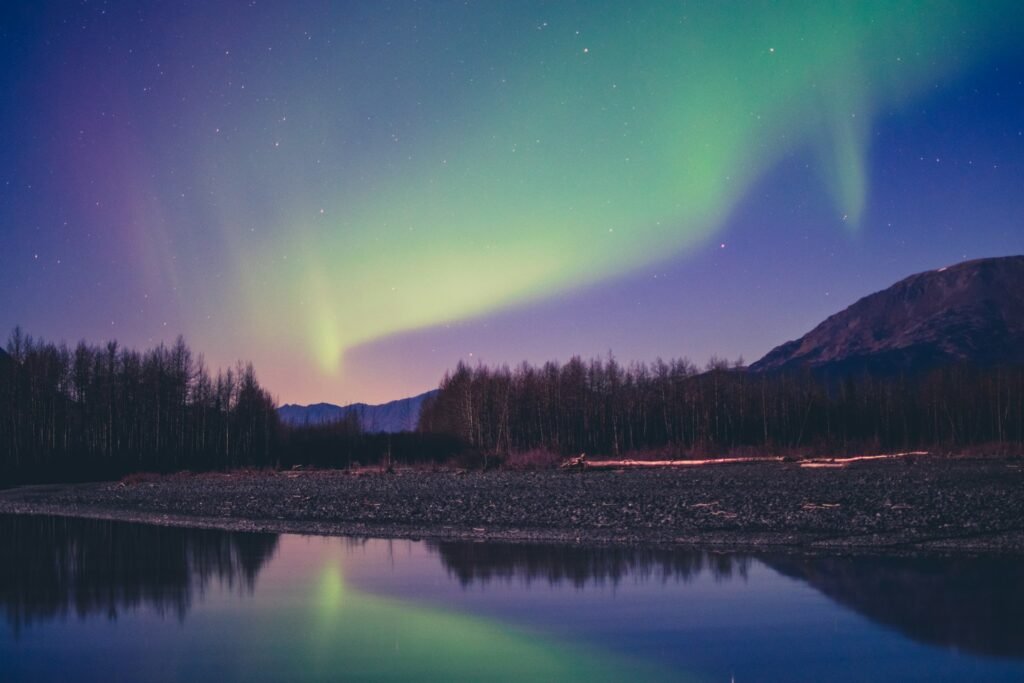
The Last Frontier Changes Hands
Every October 18th, the streets of Sitka, Alaska, fill with a peculiar blend of pageantry and reflection. Residents don period costumes, the Alaska Day parade winds through the former Russian capital, and historical reenactors gather on Castle Hill. This annual observance commemorates the formal transfer of the territory from Russia to the United States in 1867, an event that transformed the map of North America and seemed, at the time, like an elaborate practical joke played on an unsuspecting American public.
Seward’s Bold Negotiations
The purchase had been negotiated months earlier by Secretary of State William Seward, a determined expansionist who saw in Alaska’s vast wilderness not the frozen wasteland his critics imagined, but a strategic gateway to Pacific trade. For $7.2 million, roughly two cents per acre, the United States acquired 586,412 square miles of mountains, forests, and coastline. The Senate ratified the treaty on April 9, 1867, by a single vote, but the actual transfer required a more theatrical flourish that would unfold in the damp autumn air of coastal Alaska.
The Ceremony on Castle Hill
On a drizzly Friday morning in Sitka (then called New Archangel), 250 American soldiers marched onto Castle Hill, the seat of Russian authority since 1804. Russian Prince Dmitri Maksutov, the last colonial governor, formally handed over the territory to General Lovell Rousseau. The double-headed eagle of Imperial Russia descended from the flagpole; the American flag rose in its place. A cannon salute cracked through the mist, with several soldiers reportedly suffering minor injuries from the celebratory gunfire an appropriately chaotic beginning to American rule.
“Seward’s Folly”
Initially, Americans called the acquisition “Seward’s Folly” or “Seward’s Icebox,” convinced the government had purchased a barren refrigerator. Editorial cartoonists depicted the Secretary of State shoveling ice, while congressmen questioned the wisdom of buying what appeared to be an uninhabited wasteland. The territory was administered first by the Army, then the Treasury Department, then the Navy, a revolving door of federal oversight that reflected Washington’s uncertainty about what, exactly, to do with its strange new possession.
Gold Transforms the Territory
Everything changed when gold entered the equation. The 1896 Klondike Gold Rush and subsequent strikes at Nome and Fairbanks transformed Alaska from a federal burden into a mineral El Dorado, drawing thousands of fortune-seekers north. These stampedes established patterns of boom-and-bust extraction that persist today, validating Seward’s vision even as they brought environmental disruption and social upheaval to a land that had remained relatively unchanged for millennia.
Indigenous Perspectives
For Alaska Native peoples, October 18 marks not liberation but exchange—one colonial power for another. The Tlingit and Haida nations, who had fought the Russians in the 1802 and 1804 battles for Sitka, found themselves subject to American policies that proved equally disruptive. The transfer occurred without consultation with the Indigenous peoples who had stewarded the land for thousands of years, foreshadowing the boarding school systems and land claims battles that would reshape Native life throughout the coming century.
From Territory to Statehood
The holiday itself was formalized in 1917, the transfer’s golden anniversary, though celebrations remained modest until after World War II. Statehood in 1959, Alaska became the 49th state on January 3 of that year, giving the day new resonance, transforming it from an obscure territorial observance into a statement of distinct identity. The 49-star flag, flown briefly between Alaska’s admission and Hawaii’s statehood ten months later, occasionally appears in parades as a reminder of this transitional moment.
Modern Celebrations
Today, Sitka’s Alaska Day festivities include a memorial ceremony at the Pioneers’ Home, a ball at Harrigan Centennial Hall, and the ceremonial raising of flags at Castle Hill. Yet elsewhere in Alaska, the day passes with less fanfare and greater ambivalence. Many Native Alaskans view it as a reminder of colonial displacement, while others celebrate it as the moment Alaska entered the American orbit that would eventually grant it self-determination. This tension between perspectives animates the annual observances.
Strategic Arctic Importance
The wisdom of “Seward’s Folly” became undeniable as the twentieth century progressed. Alaska’s oil reserves, discovered at Prudhoe Bay in 1968, have contributed billions to the American economy. The state’s fisheries sustain coastal communities; its wilderness fuels a tourism industry that brings millions of visitors north annually. Militarily, Alaska remains essential to North American defense, its installations monitoring air and missile approaches from Asia, a realization of the strategic value Seward envisioned over 150 years ago.
An Enduring Legacy
As climate change transforms the Arctic, Alaska Day takes on renewed significance. The territory Seward acquired now sits at the center of geopolitical competition for newly accessible shipping routes and resources. On October 18th, as the Sitka Community Band plays and reenactors exchange scripted pleasantries on Castle Hill, Alaska Day offers a moment to consider how borders are drawn and redrawn, how wilderness becomes homeland, and how a transaction dismissed as folly became the foundation of American Arctic identity.
Photo by McKayla Crump on Unsplash