Cooking fresh fish does not require an extensive collection of specialized kitchen equipment or culinary expertise. Many home cooks mistakenly believe that preparing quality fish dishes demands expensive tools and professional training. However, with basic kitchen essentials and fundamental cooking techniques, anyone can prepare delicious fish meals that rival restaurant-quality results. This guide demonstrates how to cook fresh fish using minimal equipment while maintaining nutritional value and exceptional taste.
Essential Equipment for Fish Cooking
Before discussing cooking methods, it is important to identify the basic equipment necessary for fish preparation. Most home kitchens already contain these fundamental items, eliminating the need for additional purchases.
- A sharp chef’s knife for filleting and preparation
- A cutting board dedicated to fish preparation
- A large skillet or frying pan with a lid
- A baking sheet for oven cooking
- Basic measuring spoons and cups
- Tongs or a fish spatula for handling delicate fillets
- A meat thermometer to ensure proper doneness
- Parchment paper for easy cleanup
Pan-Searing Fresh Fish
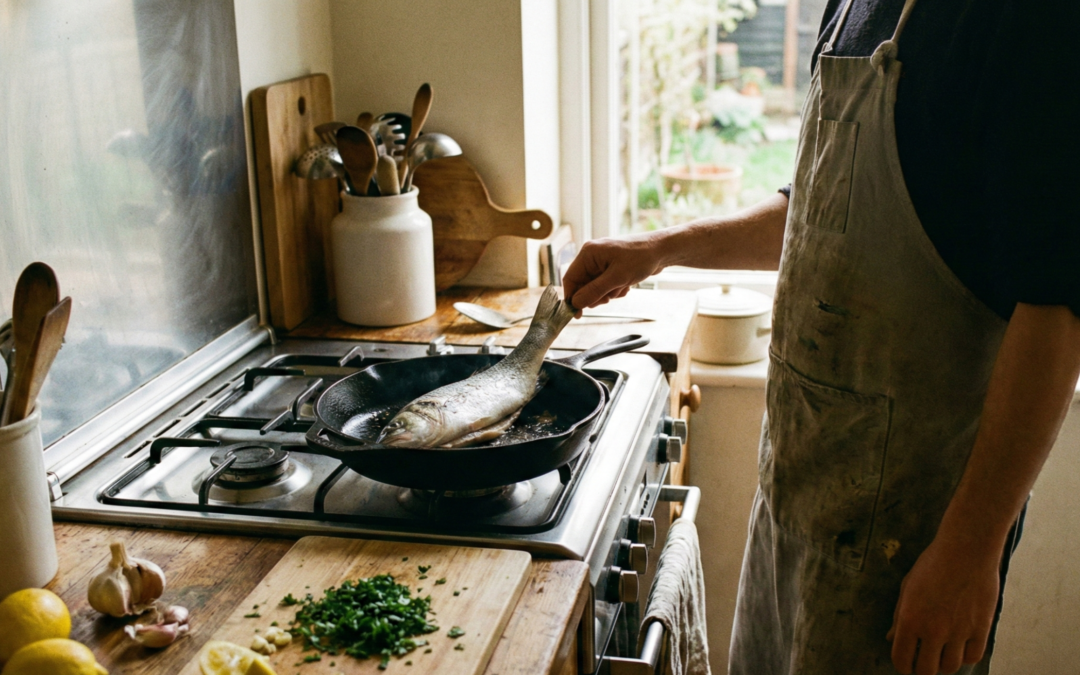
Pan-searing represents one of the most straightforward methods for cooking fish with minimal equipment. This technique produces a flavorful crust while keeping the interior moist and tender.
Begin by patting fresh fish fillets dry with paper towels, as moisture prevents proper browning. Season the fish generously with salt, pepper, and your preferred herbs. Heat a skillet over medium-high heat and add a small amount of oil with a high smoke point, such as canola or vegetable oil. Once the oil shimmers, carefully place the fish skin-side up in the pan. Allow the fish to cook undisturbed for three to four minutes, then gently flip and cook for an additional two to three minutes until the flesh becomes opaque. The fish is ready when it flakes easily with a fork.
Baking Fish in the Oven
Baking offers a hands-off approach to fish cooking that requires minimal active preparation. This method works exceptionally well for whole fish or thick fillets.
Preheat your oven to 400 degrees Fahrenheit. Line a baking sheet with parchment paper to prevent sticking and simplify cleanup. Place the fish on the prepared sheet, then season with herbs, lemon juice, and olive oil. If desired, add sliced vegetables such as tomatoes, zucchini, or bell peppers around the fish. Bake for twelve to fifteen minutes, depending on the fish thickness and type. The fish is properly cooked when it reaches an internal temperature of 145 degrees Fahrenheit.
Poaching for Gentle Cooking
Poaching represents an excellent method for cooking delicate fish varieties while maintaining moisture and tenderness. This technique requires only a pot and liquid.
Fill a large pot with water, broth, or a combination of both, bringing the liquid to a gentle simmer. Add aromatics such as lemon slices, herbs, or onion to enhance flavor. Carefully place the fish into the simmering liquid and maintain a gentle heat that produces small bubbles rather than vigorous boiling. Cook for eight to twelve minutes, depending on thickness. Poached fish works particularly well for flaking into salads or serving with light sauces.
Steaming Without Special Equipment
Steaming requires no dedicated equipment beyond a pot and a basic steamer basket or improvised alternative. This cooking method preserves nutrients and produces exceptionally moist results.
Fill a pot with one to two inches of water and bring to a boil. Place a steamer basket inside the pot, ensuring the water does not touch the basket bottom. Arrange fish on the steamer basket, season as desired, and cover with a lid. Steam for eight to ten minutes until the fish becomes opaque throughout. For those without a steamer basket, create an improvised version using aluminum foil balls arranged in the pot bottom or a colander suspended over boiling water.
Choosing Quality Fresh Fish
Regardless of cooking method, selecting quality fresh fish significantly impacts the final result. Look for fish with clear, bright eyes, firm flesh that springs back when pressed, and a mild oceanic smell. Avoid fish with a strong fishy odor, cloudy eyes, or soft spots, as these indicate age or improper storage. When possible, purchase fish from reputable sources and cook within one day of purchase.
Seasoning and Flavoring Fish
Fresh fish requires minimal seasoning to taste exceptional. Simple combinations of salt, pepper, lemon juice, and fresh herbs complement fish flavors without overpowering delicate flesh. Popular herb choices include dill, parsley, thyme, and tarragon. Garlic and ginger add depth without requiring additional equipment. Olive oil contributes richness and helps prevent sticking during cooking.
Determining When Fish is Properly Cooked
Cooking fish to the proper doneness prevents both undercooking and drying. The USDA recommends cooking fish to an internal temperature of 145 degrees Fahrenheit. For those without a thermometer, the flesh should appear opaque and flake easily when tested with a fork. Overcooked fish becomes dry and loses desirable texture, making temperature monitoring important for optimal results.
Conclusion
Cooking fresh fish successfully does not require specialized equipment or advanced skills. With basic kitchen tools and straightforward techniques such as pan-searing, baking, poaching, or steaming, anyone can prepare restaurant-quality fish dishes at home. By focusing on quality ingredients, proper seasoning, and appropriate cooking methods, home cooks can create nutritious, delicious meals that impress family and guests alike. Start with these fundamental approaches and develop confidence in fish preparation through practice and experimentation.