Every year on August 10th, Alaskans unite to celebrate Alaska Wild Salmon Day, a holiday that honors the fish that has shaped the state's identity, economy, and culture for millennia. Established in 2015 when Governor Bill Walker signed HB 128 into law, this annual observance marks a decade of recognition in 2025, reminding residents and visitors alike why wild salmon remain the heartbeat of the Last Frontier.
A Decade of Official Recognition
The journey to official recognition began when the Alaska Fisheries Development Foundation championed legislation to honor the state's most valuable renewable resource. In 2015, House Bill 128 transformed August 10th into an annual celebration, embedding salmon appreciation into Alaska's civic calendar. What started as a legislative initiative has evolved into statewide festivities that highlight both the economic might and cultural significance of wild salmon.
Alaska Wild Salmon Day: Honoring the Five Species
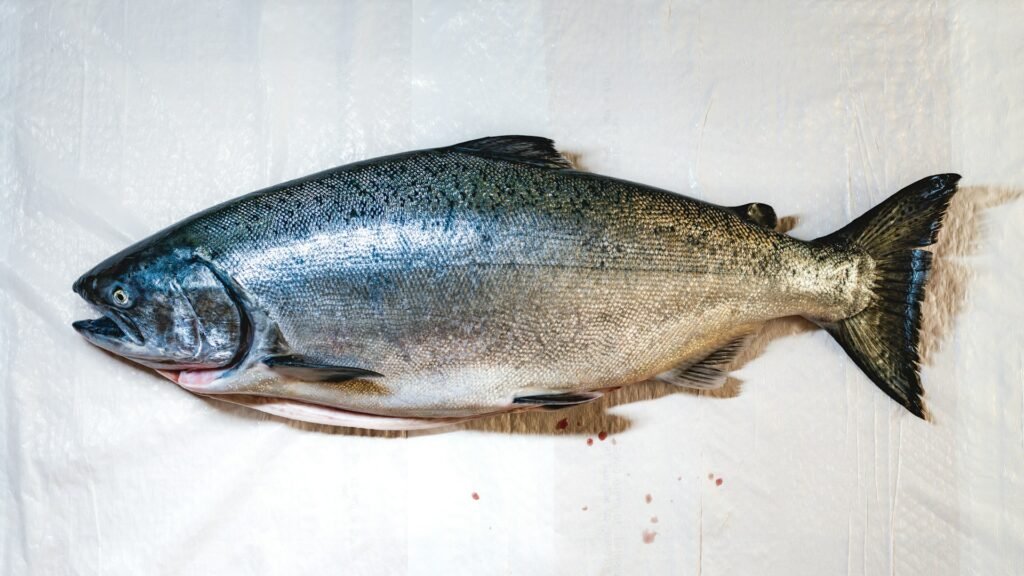
August 10th marks Alaska Wild Salmon Day, a celebration dedicated to recognizing the extraordinary diversity and value of the state's five Pacific salmon species. This annual observance highlights why these fish, Chinook, sockeye, coho, pink, and chum, have earned dedicated recognition through state legislation. The Chinook or king salmon stands as the largest and most prized, while sockeye's deep red flesh commands premium prices in Bristol Bay, home to the world's most valuable salmon fishery. Coho salmon delight anglers throughout late summer, pink salmon drive the canning industry with their staggering abundance, and chum salmon sustain Indigenous communities along the Yukon and Kuskokwim rivers. Together, these five species constitute 98% of all wild salmon harvested in the United States, making Alaska Wild Salmon Day a celebration of biological abundance and economic powerhouse rolled into one.
Wild vs. Farmed: A Critical Distinction
Unlike the farmed salmon dominating global markets, Alaska's salmon complete their entire life cycle in natural conditions. These fish navigate thousands of miles of open ocean before executing precise homing migrations to their natal spawning grounds. This wild journey creates superior flavor, firmer texture, and exceptional nutritional density, with omega-3 fatty acid profiles that aquaculture cannot replicate. The "Alaska" label on salmon packaging represents not merely origin, but a guarantee of wild-caught quality.
Constitutional Mandate for Sustainability
Alaska's commitment to salmon transcends policy; it is constitutional law. When Alaska achieved statehood in 1959, framers embedded resource sustainability directly into Article VIII, Section 4, requiring that all renewable resources "be utilized, developed, and maintained on the sustained yield principle." This pioneering provision predates modern environmental movements by decades and established Alaska as the global benchmark for fisheries management, ensuring that salmon conservation receives the highest legal protection possible.
Science-Driven Management in Action
The Alaska Department of Fish and Game transforms constitutional mandates into operational reality through rigorous, science-based oversight. Biologists employ aerial surveys, weir counts, sonar systems, and genetic sampling to monitor salmon returns in real-time. Managers adjust harvest levels dynamically to ensure adequate escapement, the critical number of fish reaching spawning grounds to reproduce. This adaptive approach has maintained healthy populations for over 60 years, with no Alaska salmon stocks currently listed as threatened or endangered.
Global Recognition of Excellence
In November 2024, Alaska's salmon fishery achieved its fifth consecutive Marine Stewardship Council certification, completing 25 years of continuous third-party validation as a sustainable wild fishery. This milestone reflects not merely regulatory compliance, but a culture of stewardship where fishermen, processors, scientists, and communities collaborate to preserve shared resources. The MSC blue label on Alaska salmon provides consumers worldwide with verified assurance of environmental responsibility.
Economic Powerhouse of the North
Wild salmon anchor Alaska's economy as the state's largest private-sector employer. The industry supports approximately 50,000 Alaskans annually, including 11,000 commercial permit holders, 20,000 processing workers, and 16,000 sport fishing jobs. Commercial harvesting and processing generate billions in economic activity, while sport fishing attracts visitors who inject additional revenue into rural communities. No other industry, not tourism, not mining, not oil, provides comparable private employment across Alaska's vast geography.
Sustaining Indigenous Cultures
For Alaska Native communities, salmon represent millennia of cultural continuity, spiritual practice, and subsistence survival. State and federal law prioritize subsistence fishing allocations, recognizing that rural residents, particularly in western Alaska, depend on salmon for up to 200 pounds of protein per person annually. These fish sustain not just bodies but identities connecting modern generations to ancestral knowledge, traditional harvesting methods, and reciprocal relationships with the natural world that define Indigenous sovereignty.
Community Celebrations Statewide
Alaska Wild Salmon Day activates communities from Ketchikan to Kotzebue. Anchorage hosts celebrations featuring live music, salmon art installations, and educational programming at the Alaska Center. Juneau's Douglas Island Pink and Chum facility opens for free tours, demonstrating how hatchery science supplements wild returns while maintaining genetic diversity. Fishing derbies, community picnics, stream restoration projects, and school educational programs transform appreciation into action, engaging citizens directly in conservation.
Challenges and the Path Forward
While celebrating abundance, Alaska Wild Salmon Day also acknowledges mounting pressures. Climate change increasingly disrupts ocean food webs and freshwater spawning habitats. Global aquaculture competition strains market prices. Proposed mining and development projects threaten critical watersheds. The very sustainability that defines Alaska's salmon requires continued vigilance, scientific investment, and political will to honor the constitutional promises made in 1959.
As August 10th approaches, Alaskans celebrate more than a fish; they honor a way of life built on respect for nature's cycles. When consumers choose salmon marked with the word "Alaska," they support the world's most sustainable wild fisheries and the diverse communities that steward them. In an era of environmental uncertainty, Alaska's wild salmon stand as living proof that humans can harvest nature's abundance while ensuring its perpetuity, a legacy worth celebrating for decades to come.
Photo by Kier in Sight Archives on Unsplash