
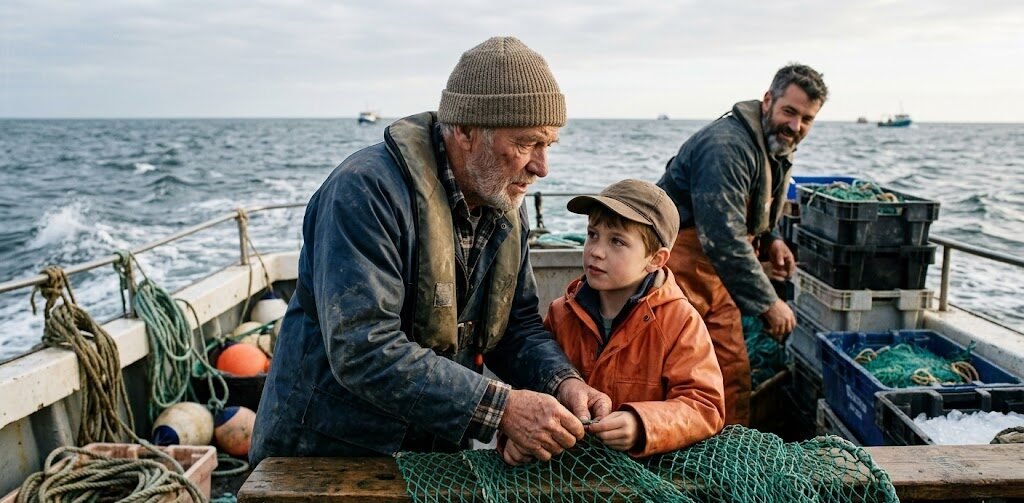
Understanding Family Fishing Legacies
Family fishing legacies represent a profound connection between generations, encompassing not merely the act of catching fish, but rather the transmission of knowledge, values, and cultural traditions across time. These legacies have shaped coastal communities and inland waterways for centuries, creating bonds that transcend simple recreational activities or commercial pursuits. The practice of passing down fishing expertise from parents to children constitutes one of humanity’s oldest forms of experiential education and cultural preservation.
Historical Roots of Fishing Traditions
The history of family fishing extends back to humanity’s earliest civilizations. Archaeological evidence demonstrates that fishing techniques were refined and transmitted across generations in ancient societies, establishing patterns of knowledge transfer that continue to influence modern practices. These ancestral traditions formed the foundation of entire communities, particularly in regions where maritime resources provided sustenance and economic stability.
Traditional fishing families developed sophisticated understanding of seasonal patterns, aquatic ecosystems, and sustainable harvesting methods long before contemporary environmental science validated these practices. This accumulated wisdom, preserved through oral tradition and hands-on instruction, represents an invaluable cultural heritage that continues to inform fishing practices today.
The Transmission of Skills and Knowledge
The passage of fishing expertise from one generation to the next involves multiple dimensions of learning:
- Technical proficiency in handling vessels, equipment, and various fishing methodologies
- Environmental awareness and reading natural indicators such as weather patterns and water conditions
- Safety protocols and best practices developed through collective experience
- Ethical considerations regarding sustainable fishing and resource management
- Cultural and spiritual connections to maritime environments
Young practitioners typically begin their education through observation and participation, gradually assuming greater responsibility as their competence develops. This apprenticeship model creates meaningful intergenerational connections while ensuring the continuity of essential skills that might otherwise be lost.
Cultural and Economic Significance
Family fishing legacies carry substantial cultural importance for communities worldwide. In many regions, fishing traditions define community identity, inform artistic expressions, and provide narrative structures for cultural storytelling. These legacies contribute to the preservation of languages, dialects, and localized knowledge systems that might otherwise disappear in contemporary society.
Economically, family fishing operations have historically provided livelihoods for millions of individuals and families. The transition of fishing businesses from one generation to the next demonstrates entrepreneurial resilience and adaptive capacity. Contemporary family fishing enterprises balance traditional practices with modern technology, creating hybrid approaches that honor ancestral methods while maintaining economic viability.
Modern Challenges to Fishing Legacies
Contemporary fishing families face unprecedented challenges that threaten the continuity of traditional legacies. Environmental pressures including overfishing, climate change, and habitat degradation have reduced fish populations in many regions. Regulatory frameworks increasingly restrict fishing practices, requiring families to adapt their traditional methods or exit the industry entirely.
Economic pressures present another significant obstacle. Young people increasingly pursue alternative career paths, perceiving limited financial opportunities in fishing industries. Educational requirements and licensing regulations can create barriers for younger generations seeking to enter family fishing businesses. The capital investment required for modern vessels and equipment often exceeds what families can sustain across generations.
Adaptation and Innovation in Family Fishing
Despite these challenges, many family fishing operations demonstrate remarkable adaptability. Progressive families integrate sustainable practices into their operations, recognizing that long-term viability depends on environmental stewardship. Technological innovations such as improved navigation systems, fish-finding equipment, and communication devices have enhanced safety and efficiency while preserving the fundamental character of fishing work.
Educational initiatives and mentorship programs increasingly support the transmission of fishing knowledge to younger generations. Tourism and experiential fishing enterprises allow families to diversify income streams while maintaining cultural traditions. Some operations have successfully marketed their heritage and sustainable practices to environmentally conscious consumers, creating new economic opportunities.
The Emotional and Psychological Dimensions
Beyond practical knowledge and economic considerations, family fishing legacies carry profound emotional significance. Time spent on water with family members creates lasting memories and strengthens relational bonds. The shared experience of facing natural elements and working toward common objectives builds character and resilience in younger family members.
For many practitioners, fishing represents more than occupation—it constitutes a way of being in the world, reflecting deep spiritual and philosophical connections to natural environments. These intangible dimensions of fishing heritage often prove as valuable as practical skills or economic returns.
Preserving Fishing Heritage for Future Generations
Several strategies have proven effective in preserving family fishing legacies:
- Documentation of oral histories and traditional ecological knowledge before institutional memory fades
- Development of educational programs that integrate fishing heritage into formal curricula
- Support for sustainable fishing enterprises through favorable regulatory and economic policies
- Creation of cultural centers and museums dedicated to fishing heritage preservation
- Facilitation of intergenerational mentorship through community-based initiatives
- Investment in infrastructure that supports both tradition and innovation in fishing practices
Conclusion
Family fishing legacies represent irreplaceable cultural and environmental heritage, embodying centuries of accumulated wisdom about marine and freshwater ecosystems. While contemporary challenges threaten traditional practices, many families demonstrate that these legacies can evolve and adapt to modern circumstances. By supporting sustainable practices, facilitating knowledge transmission, and creating economic opportunities, communities can ensure that future generations inherit not merely the skills of their ancestors, but the values and connections to natural environments that make fishing legacy meaningful. The preservation of these traditions contributes to broader goals of cultural diversity, environmental sustainability, and community resilience in an increasingly complex world.